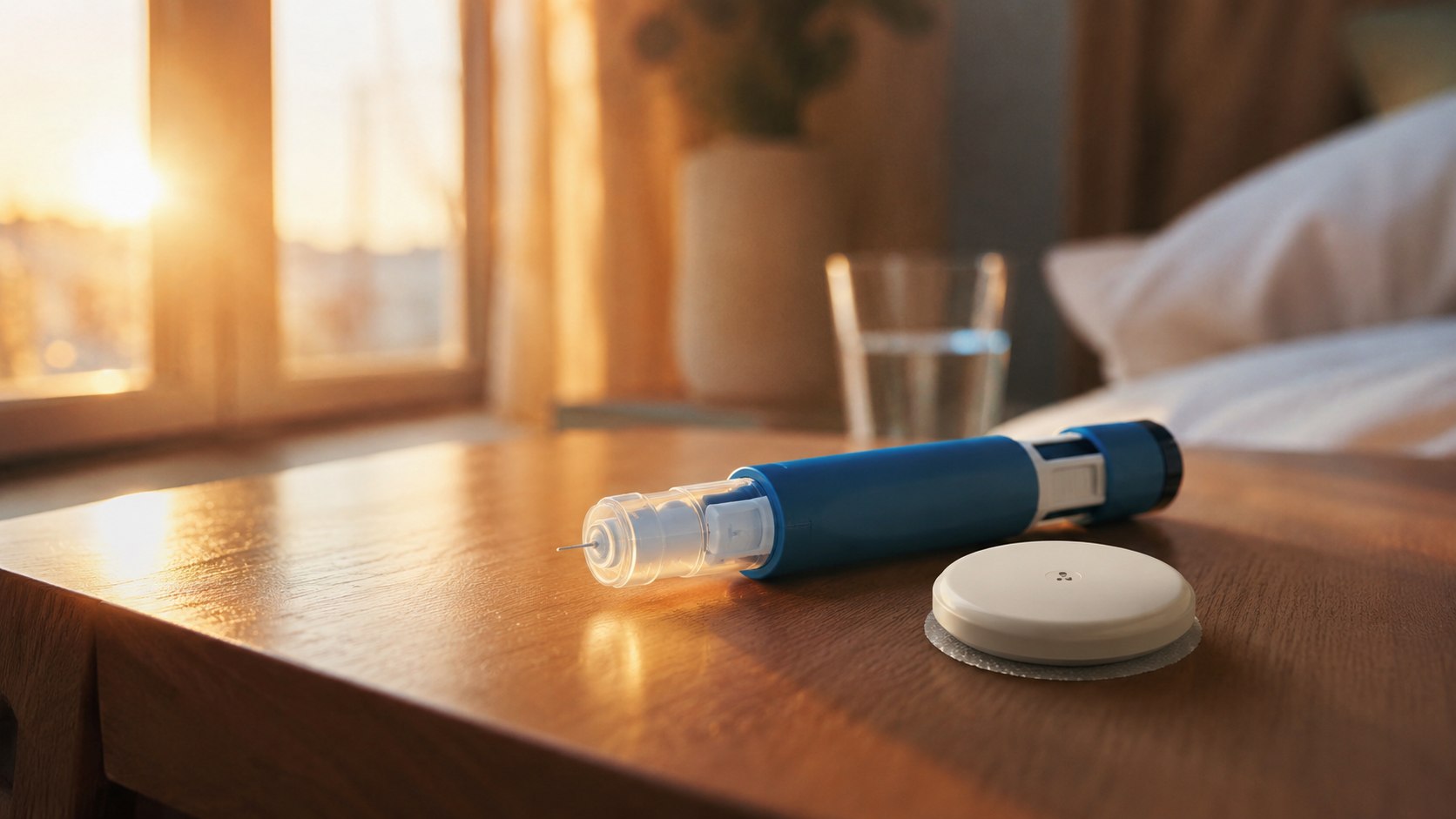
TL;DR: Zimislecel, Vertex Pharmaceuticals’ stem cell–derived islet therapy, freed 10 of 12 people with severe type 1 diabetes from insulin injections one year after a single infusion, according to phase 1/2 results published in the New England Journal of Medicine. A phase 3 trial is under way and regulatory filings are expected in 2026. The main trade-off today: lifelong immunosuppression.
For millions living with type 1 diabetes, the end of insulin injections may finally be within reach. In a landmark trial published in the New England Journal of Medicine, a single infusion of zimislecel — lab-grown pancreatic islet cells developed by Vertex Pharmaceuticals — restored natural, glucose-responsive insulin production in nearly every participant.
Lab-grown islets, delivered in one infusion
Type 1 diabetes destroys the insulin-producing islet cells of the pancreas. Zimislecel replaces them: fully differentiated islets are manufactured from stem cells and delivered through a single infusion into the portal vein, where they settle in the liver and begin sensing glucose and secreting insulin on their own. Because the cells come from a donor line (an allogeneic therapy), patients must take immunosuppressive drugs to prevent rejection.
What the trial showed in severe type 1 diabetes
All twelve participants — adults with type 1 diabetes complicated by severe hypoglycemic events and impaired awareness of hypoglycemia — met recommended glycemic targets at one year (HbA1c below 7%, more than 70% time in range) and had no severe hypoglycemic events from day 90 onward. Ten of the twelve stopped external insulin entirely, most within six months of the infusion, and the group’s average daily insulin dose fell by 92%. Adverse events were mostly mild or moderate; two deaths occurred during the study, both judged unrelated to the therapy.
The honest caveats
Zimislecel is not approved anywhere yet, and this is not a validated “cure”: the published data cover twelve patients over one year. Lifelong immunosuppression — with its own infection and other risks — is currently unavoidable, which is why the therapy is aimed first at people whose severe, unrecognized hypoglycemia already puts their lives at risk. Nothing in these results changes today’s standard of care, and no one should adjust treatment without their medical team.
Phase 3 and a 2026 regulatory horizon
The phase 3 portion of the trial completed enrollment and dosing in the first half of 2025. Vertex plans to file for approval with the U.S. FDA, the European Medicines Agency and the U.K.’s MHRA in 2026, supported by accelerated pathways including RMAT and Fast Track (FDA), PRIME (EMA) and an Innovation Passport (MHRA). If the data hold, insulin independence could move from experimental result to approved option for the most severe forms of the disease.
FAQ
What is zimislecel?
An investigational cell therapy from Vertex Pharmaceuticals: pancreatic islet cells grown from stem cells and given as a single infusion to restore natural insulin production in people with type 1 diabetes.
Does it mean the end of insulin injections?
Not yet. In the published trial, 10 of 12 participants stopped insulin at one year — a first at this scale — but the therapy is unapproved and initially intended for severe cases with hypoglycemia unawareness.
What is the main drawback?
Lifelong immunosuppressive treatment is required for now, because the infused cells come from a donor line. Reported side effects in the trial were mostly mild or moderate.
When could it become available?
Phase 3 is under way and Vertex expects to submit regulatory filings to the FDA, EMA and MHRA in 2026. Availability will depend on regulators’ decisions.
Sources
- NEJM — Stem Cell–Derived, Fully Differentiated Islets for Type 1 Diabetes (10.1056/NEJMoa2506549)
- Vertex Pharmaceuticals — ADA 2025 press release
- Healio — Zimislecel appears to restore islet function
- Managed Healthcare Executive — Phase 3 trial under way
- Pharmacy Times
Par Patrick Lancier