By David Nataf
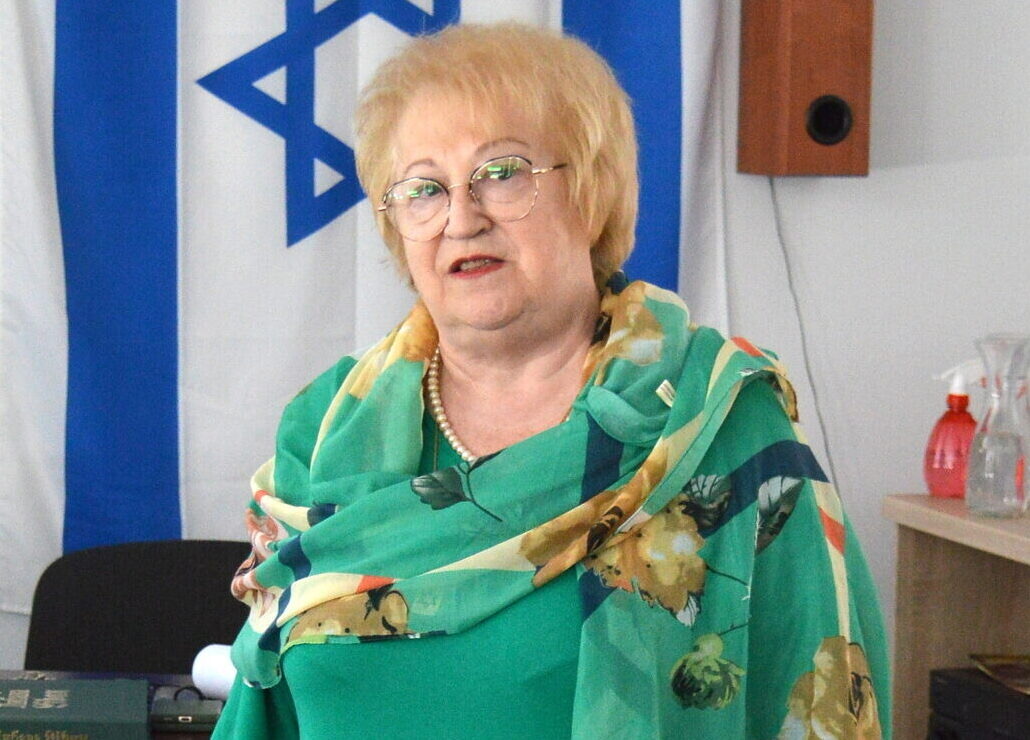
LIEPĀJA, Latvia — Ilana Ivanova (Zivson), whom I have long called “the soul of this community, a living memory”, is celebrating her 80th birthday. For decades she has been one of the driving forces behind the effort to save the memory of Jewish Libau, a community of nearly 6,000 people under Nazi occupation, of whom only around 30 who had been in the city at the time were still alive at liberation.
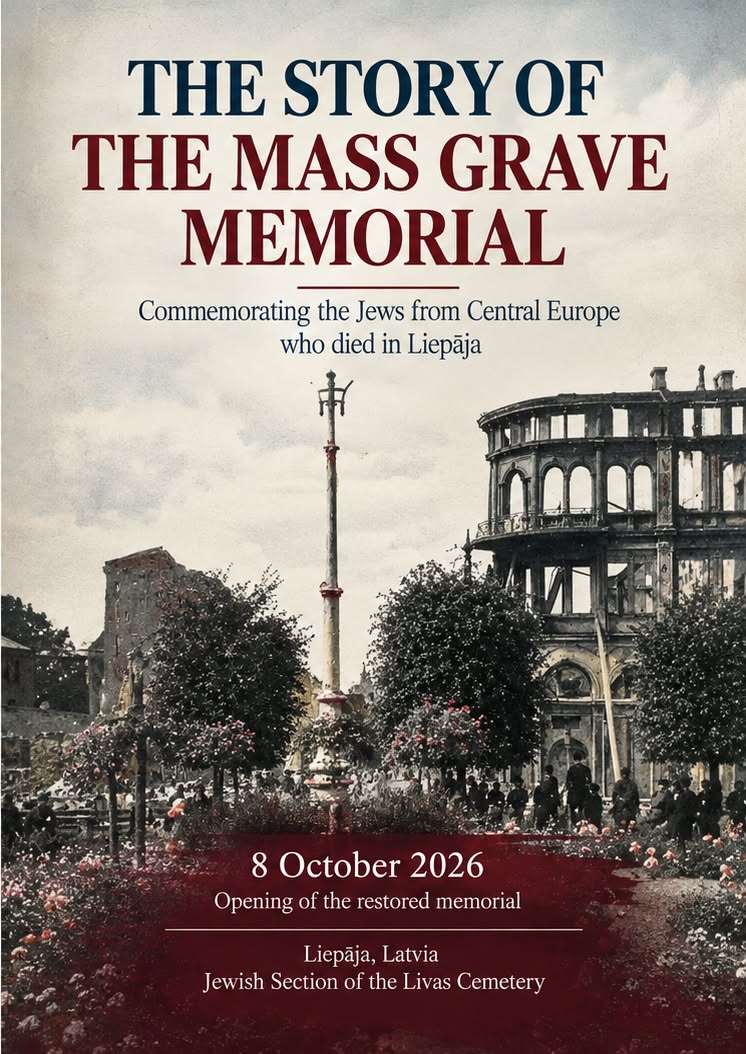
On 8 October 2026, the restored memorial to the Jews from Central Europe who died in Liepāja was opened in the Jewish section of the city’s Livas Cemetery.
Her life’s work is described in a presentation on Jewish life in Liepāja today, written by her daughter, Anna Petrova, Chair of the Liepāja Jewish Religious Community. In it, Anna Petrova presents herself “not only as its leader, but also as a third-generation descendant of the Jewish Survivors of Liepaja”, adding: “I carry this history not only as part of our collective past, but as part of my own family story.”
A family that survived, and kept the evidence
Ilana’s parents, David and Henny Zivson, survived the Holocaust in Liepāja. They were among eleven Jews hidden by Roberts and Johanna Seduls in a concealed basement shelter, where they lived for nineteen months under constant threat of discovery. Roberts Seduls was killed by shrapnel shortly before liberation; Johanna went on caring for those in hiding until they were freed. Yad Vashem recognised Johanna Sedule as Righteous Among the Nations in 1981.
David Zivson also preserved some of the most important evidence of the crime. Forced to work as an electrician for the German Security Service, he found photographs of the mass shootings at Šķēde in the office of SS commander Karl-Emil Strott and secretly made copies. According to the German Resistance Memorial Center, those copies were used as evidence at the Nuremberg and Grauel trials.
Turning inherited memory into institutions
Ilana inherited that memory and gave it a structure. According to her daughter’s presentation, she initiated and organised numerous historical, educational, cultural and international projects: the World Reunions of Liepāja/Libau Jewry, Holocaust memorial projects, conferences and exhibitions, the Otto Fischer initiative and historical publications, including the e-book The Jewish Heritage of Liepāja in the Context of the City’s History.
“Her work has helped transform inherited memory into books, memorials, reunions, educational projects, and lasting institutions for future generations,” Anna Petrova writes.
Much of this work has been carried out through the Liepāja Jewish Heritage Foundation, established in 2004. The Foundation has created memorials to the murdered Jews of Liepāja, including the memorial complex at Šķēde, a giant menorah in the dunes, which continues into the Alley of the Righteous Among the Nations. The Alley was dedicated during the 2014 World Reunion in the presence of the Israeli Ambassador.
2026: a new memorial at the lighthouse
This year’s milestone came on 24 July 2026, during the 13th World Reunion, which brought approximately 180 participants from eight countries to Liepāja. That day, the new Liepāja Lighthouse Holocaust Memorial was unveiled at Roņu iela 8C, at the site of one of the first mass executions of Liepāja Jews in the summer of 1941. It is dedicated to more than 2,000 victims and has become the city’s second major Holocaust memorial site after Šķēde.
Descendants of Libau Jews came from Israel, the United States, Germany, the United Kingdom and elsewhere to walk the streets where their families once lived. City officials and diplomats joined them.
The Otto Fischer project follows the same logic: the Austrian-Jewish coach who led Olimpija Libau to a Latvian title, murdered in 1941 because he was Jewish, now has a plaque at the Olimpija Stadium and a youth tournament in his memory.
A living community at Kungu iela 21
Memory is only half the story. At Kungu iela 21, the Liepāja Jewish Religious Community gathers for Shabbat, Torah readings and study, Rosh Hashanah, Hanukkah, Pesach and other holidays. It organises concerts, lectures and educational programmes, and provides social support to its members, including the elderly. A Jewish community and heritage museum is being developed in the same building, designed to tell “how the Jews of Liepāja lived, not only how they died”.
The community works with the City Council, Jewish organisations in Latvia and abroad, embassies and international partners, and welcomes descendants searching for their roots.
“Our community may never again number in the thousands as it did before the Holocaust, but it is here and it is alive,” Anna Petrova writes. “More than eighty years after an attempt was made to erase Jewish life from Liepāja, the Shabbat candles are still lit, Jewish voices are still heard, and our story continues.”
That continuity owes a great deal to Ilana Ivanova. To her, on her 80th birthday: mazal tov, and ad meah ve’esrim, until 120.
Leave a Reply