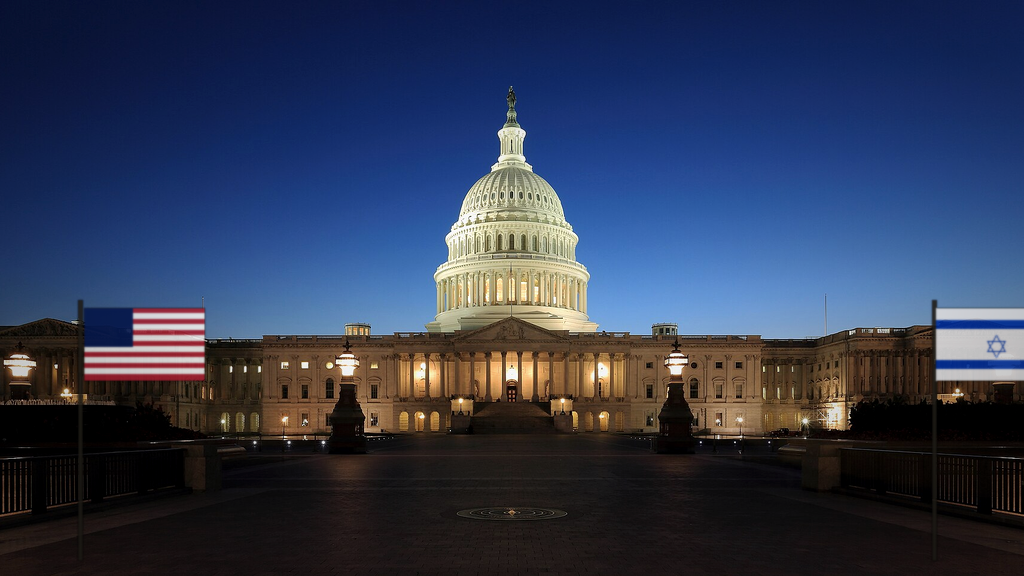
Trump sends Saudi civil nuclear pact to Congress — only if Riyadh recognizes Israel
“By Patrick Lancier”
TL;DR — The American condition is recognition of Israel. The Associated Press (26 August) reports that President Donald Trump has submitted to Congress a classified civil nuclear agreement with Saudi Arabia, under the Atomic Energy Act, while continuing to insist the pact will not move forward unless Riyadh normalizes with Israel. A Trump administration official, a congressional aide, and two others familiar with the matter spoke on condition of anonymity. Al-Monitor / Reuters (25 August) quotes an official email: “The president’s position has not changed that the agreement will only move forward if Saudi Arabia joins the Abraham Accords.” Sent Monday. Expected to reach committees Wednesday. Ninety session days. Trump could veto a rejection. This is not a pile-on. It is a recognition hinge.
Monday on the Hill: a classified 123 agreement
The classified document went to Capitol Hill on Monday, as required by the Atomic Energy Act, AP writes. The four sources would not speak on the record because they were not authorized to comment publicly on the classified matter. The agreement was signed last month in Washington by U.S. Energy Secretary Chris Wright and his Saudi counterpart. The next day, Trump said the Saudis must normalize relations with Israel through the Abraham Accords as part of the pact. Officials would not say whether that condition is written into the classified text itself. Those two facts stay side by side. The condition is the president’s. Whether it sits inside the classified pages is not confirmed.
AP notes it is unusual for the entire contents of such a pact — a 123 agreement — to be classified at this level. Previous civil nuclear agreements have been made public, sometimes with classified annexes. If approved, the deal is expected to last 30 years and to involve U.S. firms after a joint U.S.-Saudi study. This article does not invent reactor models, enrichment-plant specifications, or a price tag. It stays on the AP and Reuters wires.
The American condition is recognition of Israel
The hinge is not a side clause invented on this desk. It is the president’s position, restated. Al-Monitor / Reuters, Timothy Gardner, 25 August: the official email says the agreement will only move forward if Saudi Arabia joins the Abraham Accords — the U.S.-brokered normalizations between Israel and Arab and Muslim-majority nations. AP: Trump continues to insist the pact will not move forward if Saudi Arabia does not normalize relations with Israel. Recognition of Israel is the American condition. That is the through-line. It is not a pile-on of condemnations. It is the stated U.S. requirement.
AP writes that the Saudis were taken by surprise by the announcement that completion of the civil nuclear deal would hinge on joining the accords. Officials would not say whether the hinge is in the classified document. Surprise in Riyadh does not rewrite the American condition. The condition remains recognition of Israel.
Ninety session days, a surprised Riyadh, Jerusalem’s security line
Under the law, AP writes, Congress has 90 days while in session to review the agreement. Unless Congress passes a joint resolution of disapproval during that period, the agreement can take effect without a floor vote by either chamber. Al-Monitor / Reuters adds: the deal was sent to leaders in Congress Monday and is expected to be handed to committees on Wednesday; 90 session days; if Congress were to reject the agreement, Trump could veto that decision. Two clocks, same window. This article does not invent a floor date.
The Saudis, AP writes, have made clear that normalizing relations with Israel would first require a clear path to Palestinian statehood. Prime Minister Benjamin Netanyahu has rejected the idea of Palestinian statehood as untenable for Israel’s security. That is his sourced security line. It is attributed. It is not a pile-on. El-Ya’s house rule on this beat is simple. The U.S. condition is recognition of Israel. Jerusalem’s security argument is reported as stated. No side minister this file does not name. No invented enrichment specs. Readers who want the live wording should open the AP and Al-Monitor links.
FAQ
What did the White House send to Congress?
AP: a classified civil nuclear agreement with Saudi Arabia, submitted Monday under the Atomic Energy Act. Signed last month in Washington by Energy Secretary Chris Wright and his Saudi counterpart. Unusual for an entire 123 agreement to be classified at this level.
What is the American condition?
Recognition of Israel. Trump said the day after the signing that the Saudis must normalize via the Abraham Accords. Al-Monitor / Reuters official email: the agreement will only move forward if Saudi Arabia joins the Abraham Accords. Officials would not say whether that condition is in the classified text.
How long does Congress have?
AP: 90 days while in session; unless a joint resolution of disapproval, the pact can take effect without a floor vote. Al-Monitor / Reuters: 90 session days; sent Monday; to committees Wednesday; Trump could veto a rejection.
What is Israel’s sourced position on Palestinian statehood?
AP: Netanyahu has rejected Palestinian statehood as untenable for Israel’s security. Attributed. Not a pile-on.
Does this article invent a reactor price or enrichment plant?
No. If approved, AP expects 30 years and U.S. firms after a joint U.S.-Saudi study. No AP1000, no “tens of billions,” no enrichment-facility specs.
Sources
- Associated Press, 26 August 2026 — Matthew Lee, Seung Min Kim, Aamer Madhani: classified document submitted Monday under the Atomic Energy Act (administration official, congressional aide, two others, anonymity); signed last month by Chris Wright and Saudi counterpart; next-day Trump Abraham Accords condition; officials would not say whether the condition is in the classified text; 90 days while in session; joint resolution of disapproval or it can take effect without a floor vote; unusual for entire 123 agreement to be classified; if approved, expected 30 years, U.S. firms after a joint study; Saudis surprised; Saudis: clear path to Palestinian statehood; Netanyahu: Palestinian statehood untenable for Israel’s security
- Al-Monitor / Reuters, 25 August 2026 — Timothy Gardner: official email “The president’s position has not changed that the agreement will only move forward if Saudi Arabia joins the Abraham Accords”; sent Monday; expected to be handed to committees Wednesday; 90 session days; Trump could veto a rejection
“By Patrick Lancier”