By Luis Felipe Távora
Brazil is witnessing, not with surprise but with a profound institutional nausea, the collapse of a house of cards that should never have been built. The Banco Master affair, under the stewardship of Daniel Vorcaro, is far more than a case of mismanagement or a fleeting liquidity spasm. It stands as irrefutable evidence that Brazilian democracy has been hijacked by a crony capitalism that has found its safest haven in the marble halls of Brasília.
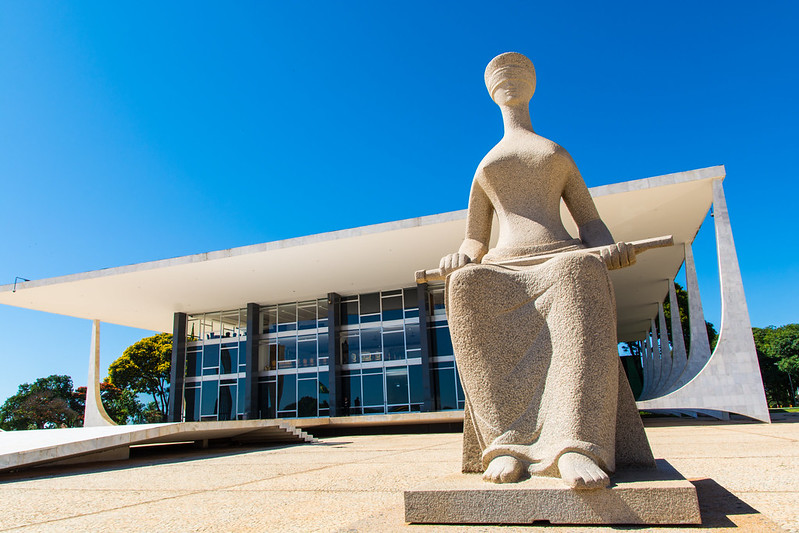
As an analyst who tracks the hidden currents of power between São Paulo’s Faria Lima and the Praça dos Três Poderes, one must call things by their proper names and lay bare the entrails of a system that has rotted in plain sight. The meteoric rise of Banco Master — growth rates that defied every law of economic gravity — was possible only because a sophisticated legal safety net operated in its rear. Vorcaro’s audacity cannot be separated from the sense of impunity granted by his connections inside the Supremo Tribunal Federal. What the country has seen is the transformation of its highest court into a trading counter where single-judge rulings and strategically timed decisions served as armour for a scheme that siphoned resources and fabricated assets.
The figure of Alexandre de Moraes, frequently portrayed as a bulwark of the institutions, now appears in a far more sinister light: that of a magistrate who, rather than guarding the rigour of the legal order, allegedly deployed his vast authority to intervene with the central bank and facilitate unorthodox manoeuvres — including the grotesque attempt to rescue the bank through the Banco de Brasília and the government of Ibaneis Rocha.
This promiscuous relationship provokes a particular revulsion in a quarter that rarely expresses itself with such visceral force: the elite of Jewish bankers in São Paulo. For these men, who inherited and built institutions grounded in the traditions of financial rigour, conservatism and, above all, ethical discretion, the “Vorcaro style” is pure heresy. A deep sense of repulsion runs through the Jewish financial community of the Paulista capital. They do not regard Daniel Vorcaro as a peer but as a predator who exploits the community’s name and the system’s loopholes to conduct what, in practice, amounts to institutional piracy.
To these old-school bankers, who understand that credibility is the only real asset a nation possesses, the sight of the Supreme Court acting as the legal department of an institution suspected of billion-real fraud is a mortal blow to Brazil’s image in global markets. The indignation rising from the offices along Avenida Faria Lima is not merely moral; it is existential. They know that when a Supreme Court justice intervenes to save an insolvent bank in exchange for political favours, “Brazil risk” ceases to be a line on a chart and becomes an economic death sentence.
My own investigations, supported by international sources, uncover a corruption axis that recognises neither borders nor technical norms. The plan to offload the corpse of Banco Master onto the lap of Banco de Brasília was the final throw of a clique convinced it stands above the law — because, ultimately, it controls those who interpret it. The complicit silence of sections of the media and the inertia of the Public Prosecutor’s Office in the face of evidence linking ministerial offices to Vorcaro’s operators are symptoms of an institutional metastasis.
Brazil can no longer tolerate this shadow play. The serious financial elite, international investors and ordinary citizens alike demand that the clean-up begin at the very top. If the Supremo Tribunal Federal proves incapable of purging from its ranks those who have traded the toga for political deal-making, the country will remain an institutional pariah — a place where financial crime is not fought but rubber-stamped with the seal of constitutional approval.
The revulsion emanating from Faria Lima is the final alarm bell. The mechanism has been exposed, and this time notes of disapproval will not be enough to contain the approaching tsunami.