The Joodse Canon: The History and Jewish Contributions to the Netherlands Over More Than 700 Years
The Joodse Canon (Dutch Jewish Canon) traces the rich and continuous history of Jews in the Netherlands from the Middle Ages to the present day. This project highlights their cultural, economic, and social contributions as well as their resilience in the face of persecution. Discover in this article the key periods, emblematic figures, and recurring themes of this remarkable history.
What is the Joodse Canon?
The Joodse Canon is a historical and educational project that documents over seven centuries of Jewish presence in the Netherlands. Initiated by organisations such as the Joods Maatschappelijk Werk (Jewish Social Service, founded in 1946) and the educational centre Crescas, it aims to celebrate the contributions of the Sephardic and Ashkenazi communities to Dutch society.
Organised chronologically by century, this “canon” emphasises the gradual integration of Jews, their role in the Dutch Golden Age, and their reconstruction after the Shoah. It reminds us that Jews, though always a small minority, have profoundly shaped Dutch history in the areas of tolerance, innovation, and culture.

Majestic interior of the Portuguese Synagogue in Amsterdam, symbol of the Dutch Jewish Golden Age
The Major Periods of Dutch Jewish History
The Middle Ages and the 17th Century: The Arrival of the “New Jews” and the Golden Age
Jewish presence dates back to 1295 with the Jodenstraat (Jews’ Street) in Maastricht. The 17th century marked a turning point with the massive arrival of Portuguese Jews fleeing the Inquisition and Ashkenazi Jews from Eastern Europe.
Key moments include:
- 1615 → Founding of the Santa Companhia de Dotar Orphas e Donzellas (aid for orphan girls).
- 1616 → Establishment of the Talmud Torah.
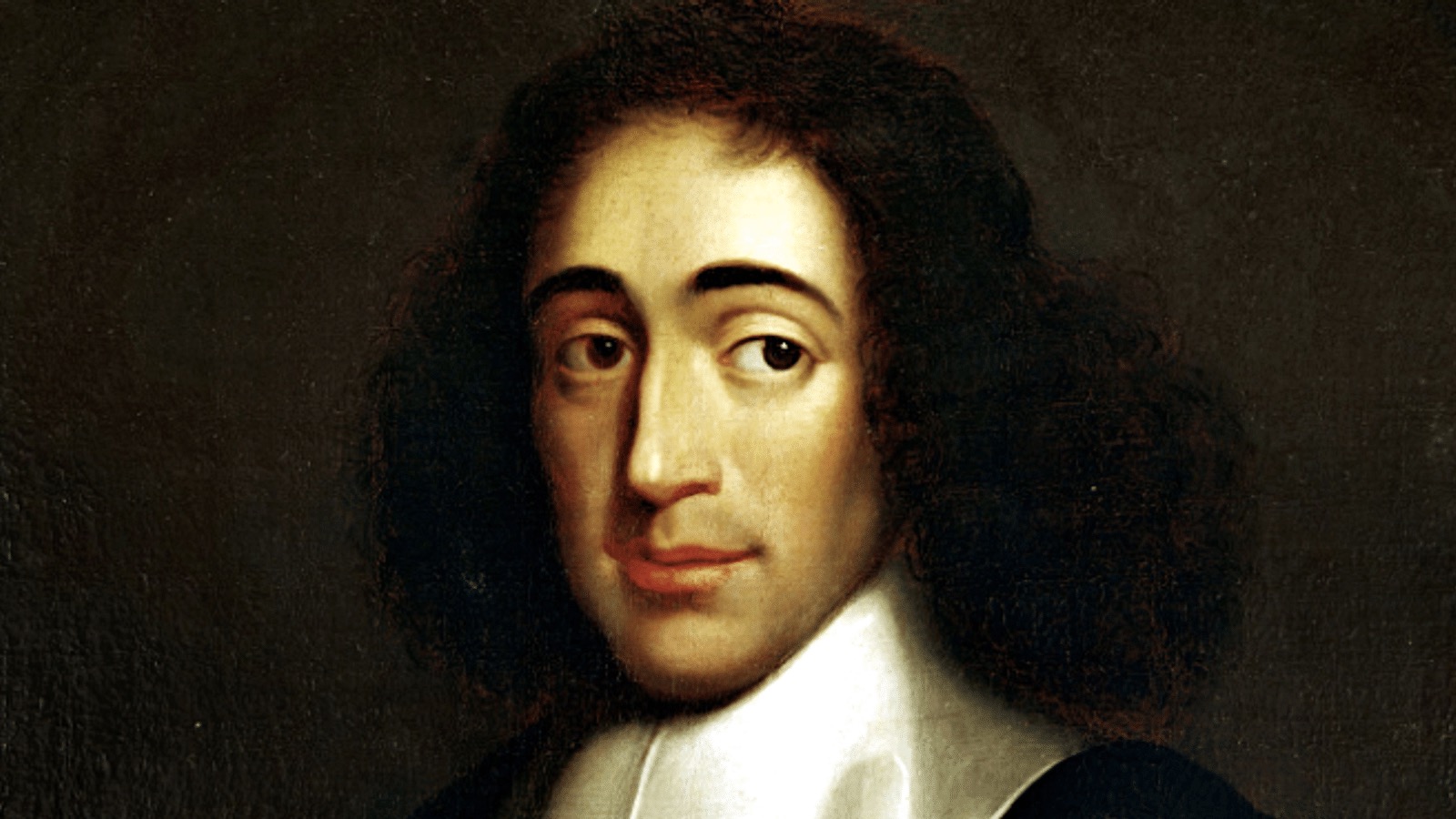
- 1656 → Excommunication (herem) of Baruch Spinoza, the philosopher who laid the foundations of modern rationalism.
- 1675 → Inauguration of the magnificent Portuguese Synagogue in Amsterdam, a symbol of tolerance.
This period also saw the development of the silk industry (1644), the diamond trade, and international philanthropy.

Portrait of Baruch Spinoza, an emblematic figure of the 17th-century Netherlands
18th and 19th Centuries: Expansion, Stability, and Emancipation
The 18th century was characterised by community expansion (synagogues in Rotterdam, luxurious residences along the Amstel). The 19th century brought full integration:
- 1796 → Emancipation decree.
- 1817 → Obligation to learn Dutch.
- 1860 → Michel Henri Godefroi, the first Jewish minister.
- 1894 → Founding of the General Dutch Diamond Workers’ Union, an economic pillar.
The arrival of Eastern European Jews (Ostjuden) further enriched the community.
20th Century: A Century of Extremes and Reconstruction
The 20th century alternated between immigration, persecution, and rebirth:
- 1933–1939 → Influx of German refugees.
- 1941–1945 → Shoah, with the Westerbork camp, the Jewish Council, and the tragedy of Anne Frank.
- Post-1945 → Return of survivors, creation of Joods Maatschappelijk Werk, and celebration of the State of Israel (1948).

Anne Frank’s room in Amsterdam, a universal symbol of the Shoah

The Portuguese Beth Haim Cemetery in Ouderkerk aan de Amstel, one of the oldest in Western Europe
Today, the community remains vibrant with modern institutions such as the Jewish Cultural Quarter in Amsterdam.
Emblematic Figures and Recurring Themes
Among the most prominent figures:
- Spinoza
- Saul Levi Morteira
- Isaac de Pinto
- Anne Frank
- Jacob Soetendorp
The dominant themes include:
- Cultural contributions → Synagogues, Hebrew printing, music.
- Economic contributions → Diamond, industry, finance.
- Social resilience → Philanthropy, education, political integration.
- Survival through trials → Emancipation, Shoah, contemporary renaissance.
Why the Joodse Canon Remains Relevant Today
This canon reminds us that Jewish history is inseparable from Dutch identity: tolerance, innovation, and human rights are its direct fruits. In a global context of rising antisemitism, it calls for the preservation of this collective memory.
For more information, visit the official website: https://joodsecanon.nl.
The history of Jews in the Netherlands, their contributions, and the Joodse Canon together form a timeless source of inspiration.