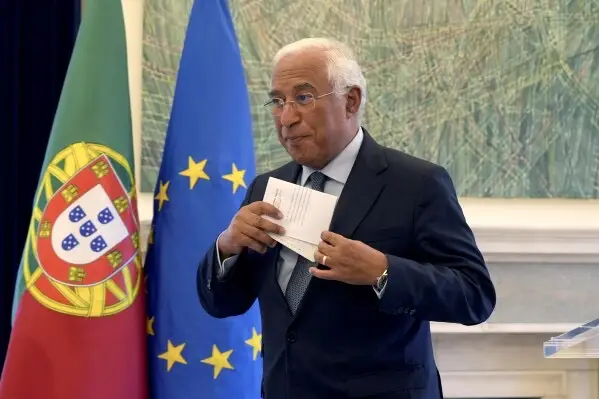
Portugal, long seen as a stable haven in Southern Europe, has been hit by an unprecedented political crisis since 2023: two consecutive governments have collapsed because of major corruption scandals. The 2025 Corruption Perceptions Index from Transparency International has just confirmed the country’s worst historical score. Behind the numbers lies a darker reality: undue influence in green-transition mega-contracts, opaque ties between politics and business, chronic judicial delays, and anti-corruption reforms that are moving far too slowly. Here is a complete, chronological, fully sourced investigation.
1. The CPI 2025 Alarm: The Worst Score in History
Published on 11 February 2025 by Transparency International, the Corruption Perceptions Index (CPI) 2025 gives Portugal 56/100 (down from 57 in 2024), ranking it 46th out of 182 countries. This is the lowest score the country has ever received.
- Trend: Steady decline since 2015 (peak of 64 in 2016). While Western Europe’s average is also falling, Portugal is well below the regional average (~64).
- TI Analysis: “Perception of public office being abused for private gain” worsened by recent scandals (lithium, green hydrogen). José Fontão, head of TI Portugal, speaks of “institutional degradation” linked to opaque public tenders and unregulated lobbying.
Official links:
- TI Portugal page: https://www.transparency.org/en/countries/portugal
- Full CPI 2025 report: https://www.transparency.org/en/cpi/2025
- Trading Economics raw data: https://tradingeconomics.com/portugal/corruption-index
The government (XXV Constitutional, February 2026) responded on 10 February: “We lost one point and three places, but the ongoing reforms are not yet reflected in the data.” It refers to the June 2024 Anti-Corruption Agenda (42 measures, 17 already implemented).
Official government link: Government statement
2. Operation Influencer (2023-2026): The Scandal That Toppled António Costa
On 7 November 2023, the Public Prosecutor’s Office launched Operation Influencer: raids on 42 locations, including the official residence of socialist Prime Minister António Costa. Five arrests, including his chief of staff Vítor Escária (€78,000 in cash found hidden in books and wine boxes).
At stake: Suspicions of active/passive corruption, influence peddling and malfeasance in four massive green-transition contracts:
- Lithium mines in Barroso (Boticas) and Romano (Montalegre) – strategic EU battery mineral.
- Green hydrogen plant H2Sines and Sines 4.0 data centre (investment > €20 billion).
Key figures: António Costa (suspected of direct intervention), João Galamba (formally charged), Vítor Escária, Nuno Mascarenhas, Diogo Lacerda Machado…
The investigation remains active in February 2026.
Primary sources:
- Wikipedia full timeline: https://en.wikipedia.org/wiki/Operation_Influencer
- Portugal Resident (2025 updates): Article
- ECO/Sapo (14 Nov 2025): Link
3. Spinumviva (2024-2025): The Scandal That Toppled Luís Montenegro
Less than one year after taking office (March 2024), the minority right-wing government fell in March 2025 on a motion of no confidence linked to Spinumviva, a consulting company created by Prime Minister Luís Montenegro.
Revelation: Investigations by Expresso and Correio da Manhã showed Spinumviva receiving thousands of euros monthly from clients who secured ≥ €100 million in public contracts.
Sources:
- Al Jazeera (16 May 2025): Link
- Brussels Signal (March 2025): Link
- Portugal Resident (9 Dec 2025): Link
4. The Historic Landmark Case: Operation Marquês (2014-2026)
Former socialist Prime Minister José Sócrates (2005-2011) is still on trial for corruption, money laundering and tax fraud (€34 million presumed). Risk of prescription in early 2026.
5. International Assessments: Real Reforms, But Clearly Insufficient
GRECO (Council of Europe) – 5th Round Compliance Report, 2 September 2025: 0 recommendations fully implemented, 18 partially. Serious gaps in lobbying regulation and asset declarations.
Full PDF: Download GRECO Report
EU Rule of Law Report 2025 (July 2025): Same warnings.
6. Analysis: Why Does It Persist?
Portuguese corruption is not “widespread” like 1990s Italy, but systemic in big contracts (the green transition = golden opportunity). Justice is slow, lobbying stays in the shadows. The political class is seen as a closed circle (93 % of Portuguese say corruption is “widespread”).
Portugal is NOT the most corrupt country in Europe (Hungary and Bulgaria close the EU ranking with ~40/100).
But it has just recorded its worst historical score: 56/100 in Transparency International’s 2025 Corruption Perceptions Index (drop of 1 point and 3 places, 46th worldwide).
Two consecutive governments have fallen in less than two years over major corruption cases (Operation Influencer – lithium & green hydrogen – and Spinumviva). 93 % of Portuguese people consider corruption “widespread”. Lobbying remains unregulated, asset declarations are opaque, and justice is too slow.
In short: Portugal still sits in the upper half of Western Europe… but it is sliding backwards faster than any of its neighbours. The ecological transition that was supposed to be its proudest achievement has become its biggest source of suspicion. Without much deeper and faster reforms, the scandal → government fall → snap election cycle risks becoming Portugal’s new normal.
Official sources verified 27 February 2026:
• Transparency International CPI 2025 → Link
• GRECO 2025 Report → PDF