Category: Israel

  • At the Western Wall, Congo’s President Prays for Jerusalem: Israel’s African Gamble

    At the Western Wall, Congo’s President Prays for Jerusalem: Israel’s African Gamble

    TL;DR — On 1 September 2026, the President of the Democratic Republic of the Congo, Félix Tshisekedi, paid an official visit to Israel: welcomed by President Herzog and Prime Minister Netanyahu, praying at the Western Wall and touring its tunnels, while his foreign minister met Gideon Sa’ar. Kinshasa, which pledged as early as 2023 to open an embassy in Jerusalem, reaffirmed that commitment.

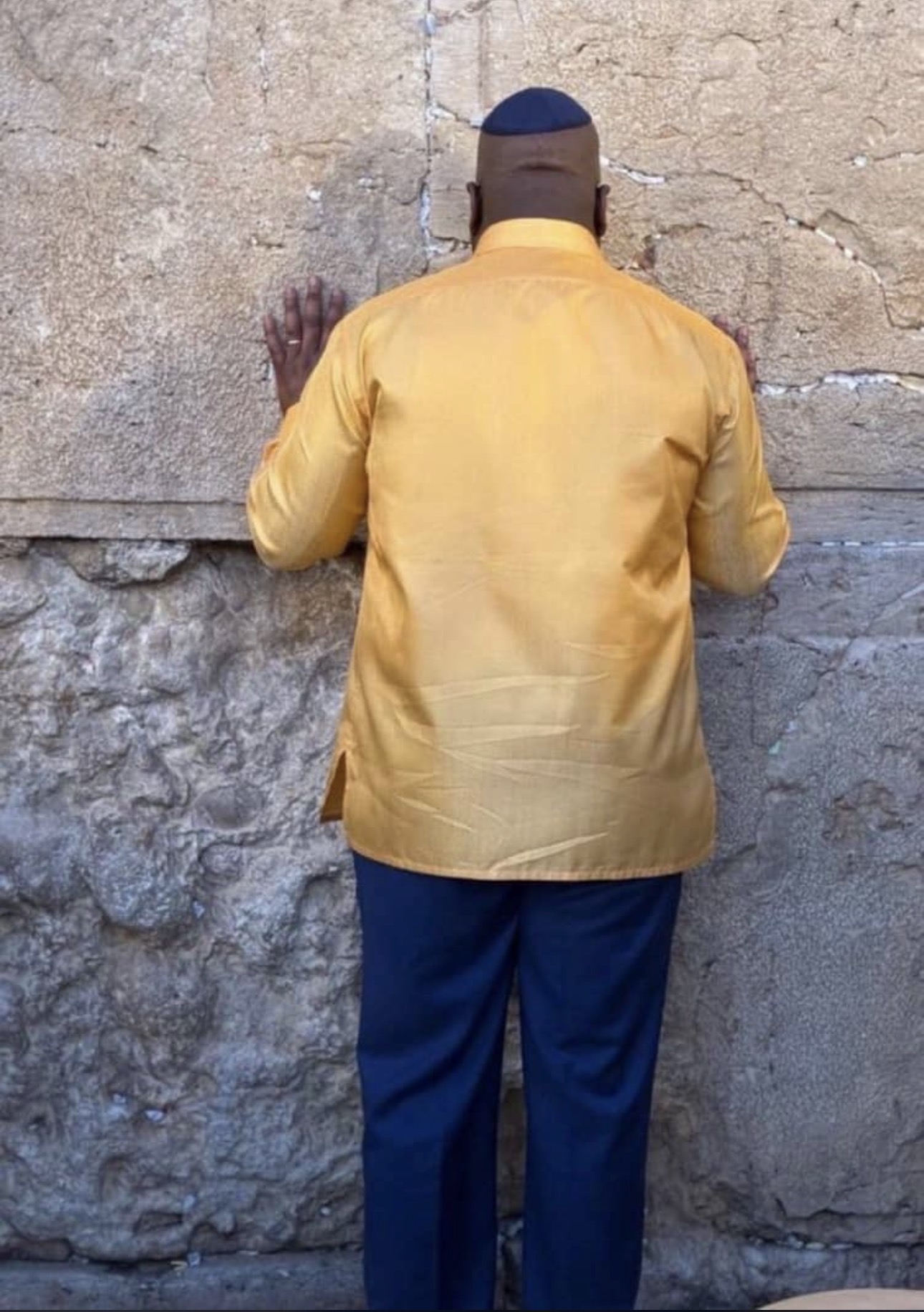
    Some images sum up a policy. On 1 September 2026, in Jerusalem, Félix Tshisekedi, President of the Democratic Republic of the Congo, laid his hand on the stones of the Western Wall, wearing a kippah, and placed a prayer note between them before touring the Kotel tunnels. Received the same day by President Isaac Herzog and then by Prime Minister Benjamin Netanyahu, while his foreign minister, Thérèse Kayikwamba Wagner, met Israeli Foreign Minister Gideon Sa’ar, the Congolese leader did not come as a mere visitor. He came to reaffirm a choice.

    A rare commitment: an embassy in Jerusalem

    The DRC belongs to the very small circle of countries that have pledged to place their embassy in Jerusalem. Tshisekedi announced it back in 2023; the move has since been delayed, with Israel due to open a mission in Kinshasa in return. This visit puts it back on track. In a world where recognising Jerusalem as Israel’s capital remains a weighty diplomatic act taken by only a handful of states, the Congolese commitment stands out — and would make the DRC the first sub-Saharan African country to take that step.

    The stakes for Congo

    For Kinshasa, drawing closer to Israel is far from symbolic. The DRC has for years faced a war in its east, where the M23 rebellion destabilises the Kivu provinces; a peace process with neighbouring Rwanda is under way and was raised during the visit. Congo is seeking partners in security, intelligence, cyber-defence and agriculture — fields in which Israeli expertise is recognised. Add the religious dimension: the DRC is an overwhelmingly Christian country, where support for Israel and attachment to Jerusalem run deep. Praying at the Kotel speaks to Tshisekedi’s electorate as much as to his partners.

    The stakes for Africa

    The Congolese move is part of a wider re-engagement. Long complicated, Israel’s relations with Africa are warming — and Jerusalem is cultivating it actively: cooperation in agriculture, water, solar energy, health and security. The DRC, a giant of 100 million people and a heavyweight of the African Union, matters. Its gesture may set an example on a continent where several capitals still hesitate between old solidarities and new interests. For Africa, the equation is clear: engaging Israel means access to breakthrough technologies in water, agrifood and digital — just when the continent needs them most.

    The stakes for Israel

    For Israel, finally, the visit is a diplomatic breath of fresh air. Under intense international pressure since October 2023 and facing attempts at isolation, the Jewish state needs open friends. An African head of state praying openly at the Western Wall and confirming his embassy in Jerusalem is a living rebuttal to the narrative of isolation. There is also a first-order strategic interest: the DRC holds the world’s largest cobalt reserves and major coltan and copper deposits — the critical minerals of the energy transition and the defence industry. Behind the prayer lies a geopolitical and economic card Jerusalem has every reason to play.

    A hand on the stone, a political signature

    By placing his hand on the Wall, Félix Tshisekedi did more than perform an act of faith. Before the world, he signed an alliance in the making — between an African giant rich in resources and youth, and an Israel seeking to break the circle of its isolation. The image must now become action: the promised embassy, security agreements, economic partnerships. But in Jerusalem, on that 1 September, the direction was unmistakable.

    FAQ

    Who is Félix Tshisekedi?

    The President of the Democratic Republic of the Congo, on an official visit to Israel on 1 September 2026.

    What did he do in Jerusalem?

    He prayed at the Western Wall, placed a note between its stones and toured the tunnels, and was received by President Herzog and Prime Minister Netanyahu.

    Has the DRC moved its embassy to Jerusalem?

    It pledged to do so in 2023 and reaffirmed it; the actual move remains delayed, with Israel due to open an embassy in Kinshasa in return.

    Why does this visit matter?

    It seals a strategic rapprochement: security and technology for Congo, African openness and critical minerals for Israel, at a moment of heavy diplomatic pressure on Jerusalem.

    By Patrick Lancier
  • Captain Ella, Lieutenant Colonel: The Arab Israeli Woman Who Speaks to the Arab World for the IDF

    Captain Ella, Lieutenant Colonel: The Arab Israeli Woman Who Speaks to the Arab World for the IDF

    TL;DR — Born in Qalansawe, an Arab Muslim town in Israel’s Triangle region, Ella Waweya became the Israeli military’s Arabic-language spokesperson on 15 February 2026, succeeding Avichay Adraee. A lieutenant colonel, she is the highest-ranking Muslim in the IDF and the first woman to lead the army’s Arabic communications. Known as “Captain Ella,” she has more than half a million TikTok followers and 200,000 on X.

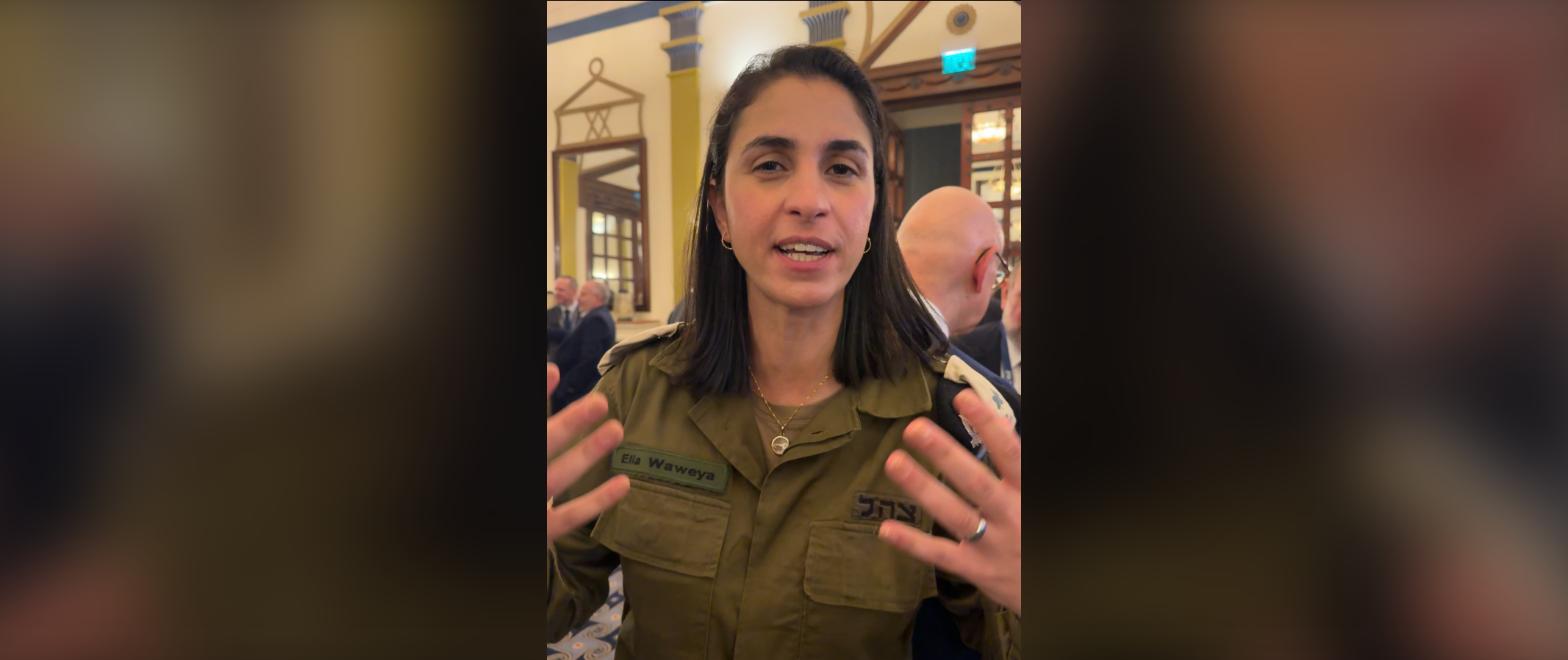
    Some life stories capture an entire society. Ella Waweya’s is one of them. On 15 February 2026, a quiet handover ceremony in Tel Aviv changed the face of Israeli military communications: Colonel Avichay Adraee, the IDF’s Arabic-language voice for nearly two decades, passed the role to a 36-year-old woman from an Arab town in central Israel. Promoted to lieutenant colonel, Ella Waweya becomes the highest-ranking Muslim in the Israeli army and the first woman to head its Arabic communications.

    Who is Ella Waweya?

    She was born on 16 October 1989 in Qalansawe, an Arab Muslim town in Israel’s Triangle region. She grew up at a time when, for many of her neighbours, the Israeli uniform still stood for the adversary. A teenager during the Second Intifada, she watched the conflict through Al Jazeera’s screen. Then came the day, at sixteen, when she was handed her Israeli ID card. One thought stayed with her: she is a citizen of this country. The rest of her life would be a patient answer to that fact.

    She was a serious student. She earned a BA with honours in communications from Netanya Academic College, followed by an MA — also with honours — in government and political marketing from the Interdisciplinary Center Herzliya (Reichman University). She worked in the media, including radio, and founded the “Shared Life” project dedicated to Arab–Jewish coexistence. After national service at Meir Hospital in Kfar Saba in 2011, she made a decision that would upend her life.

    A volunteer enlistment, kept secret

    In 2013, Ella Waweya volunteered for the IDF — service that Israeli law does not require of the country’s Arab citizens. She became the first female soldier from her region. By her own account she went so far as to collect the keys to the family’s mailboxes, to be sure the army’s letter would reach no eyes but her own. She hid her uniform for nearly a year and a half. In 2015, President Reuven Rivlin awarded her a distinction for excellence as a soldier.

    “Captain Ella”: a voice for the Arab world

    For seven years, under the name “Captain Ella,” she built a singular presence: an Israeli officer, a Muslim, an Arabic speaker, addressing the Arab world directly in its own language. Today she has more than half a million followers on TikTok and around 200,000 on X. Her work has earned commendations from Israel’s president, defence minister and chief of staff.

    She describes a job that is as much interpreter as spokesperson: tailoring each message to its audience. Before an Israeli or open audience, the tone is direct and pedagogical; before a hostile one, it takes firmness, visual proof, presence in the field. She likes to compare her mission to Plato’s allegory of the cave: the prisoners mistake the shadows on the wall for reality. Her role, she says, is not to paint prettier shadows but to testify to what lies outside — even when the outside is hard to look at.

    A symbol beyond a single career

    Her appointment is bigger than one woman’s path. In Qalansawe, some twenty young people have since followed the road she opened toward the army’s communications units. For them, the IDF is no longer only a hostile rumour: it is also the face of a woman from their own village, in uniform, speaking their language. In succeeding Avichay Adraee, Ella Waweya did not change her name when she changed her rank. The insignia changed. The composure did not.

    In a region that too often adds up identities as if they were contradictions, her path says the opposite: one can be Arab, Muslim, Israeli and an officer, without giving up anything. She embodies a rare and unapologetic pride — that of an Arab woman proud to be Israeli, who sees in her citizenship neither betrayal nor surrender, but full belonging. That may be the strongest message she carries, far beyond her official duties.

    FAQ

    Who is Captain Ella?

    Ella Waweya, an Israeli army officer born in 1989 in Qalansawe, known as “Captain Ella.” Since 15 February 2026 she has been the IDF’s Arabic-language spokesperson.

    What is her rank?

    Lieutenant colonel. She is the highest-ranking Muslim in the Israeli army.

    Whom did she replace?

    Colonel Avichay Adraee, the IDF’s Arabic-language spokesperson for nearly two decades, who stepped down in early 2026.

    Why is her path exceptional?

    Israel’s Arab citizens are not subject to conscription. She volunteered in 2013, becoming the first female soldier from her region.

    By Patrick Lancier

  • 800,000 Years Ago, Early Humans in Israel Already Planned How They Made Their Tools

    800,000 Years Ago, Early Humans in Israel Already Planned How They Made Their Tools

    TL;DR — A new study published in Scientific Reports finds that early humans at Gesher Benot Ya’aqov in northern Israel deliberately selected specific basalt sources for different stages of stone-tool production nearly 800,000 years ago. The finding points to advanced planning, deep environmental knowledge and traditions passed down across generations.

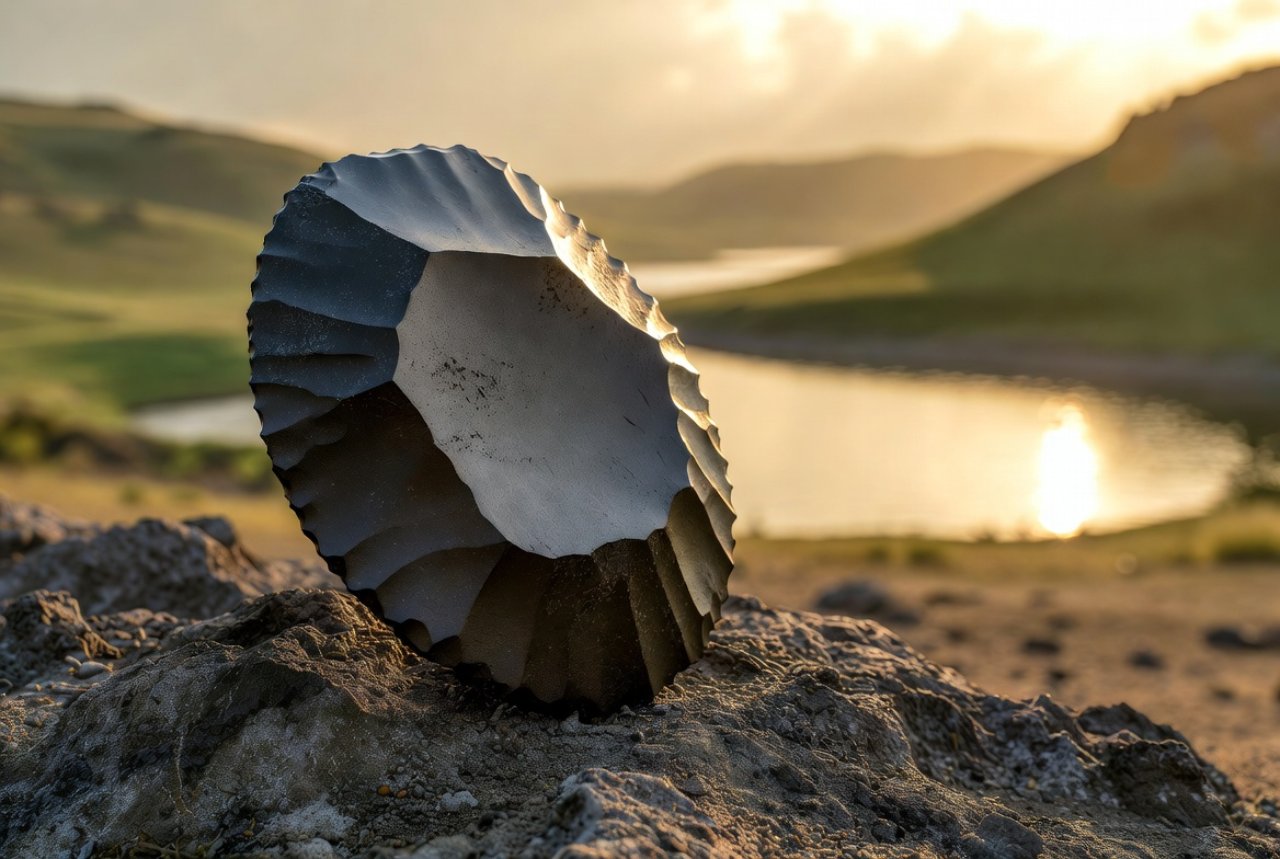
    Nearly 800,000 years ago, the early humans who lived on the shores of ancient Lake Hula were far from opportunistic toolmakers. According to a new study of stone tools from Gesher Benot Ya’aqov, they carefully chose which type of rock to use for each task — a level of foresight that reshapes how we think about early human intelligence.

    What did the researchers discover?

    The team found that the site’s inhabitants did not simply pick up whatever stone lay nearby. Instead, they deliberately sourced particular basalt flows for particular stages of tool-making. This selective behavior implies planning, memory of the landscape, and technological traditions that were maintained and repeated over long periods.

    Where is Gesher Benot Ya’aqov?

    Gesher Benot Ya’aqov (GBY) is an Acheulian archaeological site in northern Israel, on the shores of the former paleo-Lake Hula in the Jordan Valley. Dated to roughly 780,000 years ago, it preserves repeated occupations by early hominins and is one of the richest windows into life in the Middle Pleistocene.

    How did scientists trace the stone?

    Researchers used geochemical analysis to read the chemical “fingerprint” of each basalt artifact and match it to specific lava flows — including some that are now buried and invisible at the surface. By reconstructing a landscape that has changed dramatically over hundreds of thousands of years, they could show exactly where the toolmakers collected their raw material. The work was led by Dr. Tzahi Golan and Dr. Yoav Ben Dor of the Geological Survey of Israel, with Prof. Naama Goren-Inbar of the Hebrew University of Jerusalem.

    Why does this matter for human evolution?

    Deliberate raw-material selection is a hallmark of complex cognition. Showing that hominins were making these choices nearly 800,000 years ago pushes the evidence for long-term planning and cultural transmission much deeper into the human past than many models assumed.

    What is the Acheulian culture?

    The Acheulian is a prehistoric stone-tool tradition, best known for its teardrop-shaped hand-axes, that spanned roughly 1.7 million to 200,000 years ago. It is associated mainly with Homo erectus and related early humans, and Gesher Benot Ya’aqov is one of its most important sites outside Africa.

    FAQ — Early human tool-making at Gesher Benot Ya’aqov

    How old are the tools from Gesher Benot Ya’aqov?

    They date to about 780,000–800,000 years ago, during the Acheulian period of the Middle Pleistocene.

    What material were the tools made from?

    Mainly basalt, a volcanic rock, which the toolmakers sourced from specific lava flows around the site.

    Who carried out the study?

    Dr. Tzahi Golan and Dr. Yoav Ben Dor (Geological Survey of Israel) and Prof. Naama Goren-Inbar (Hebrew University of Jerusalem), published in Scientific Reports.

    Why is the discovery significant?

    It shows early humans deliberately selected raw materials, indicating advanced planning and cultural traditions far earlier than often assumed.

    Where is the site located?

    In northern Israel, on the shores of the former paleo-Lake Hula in the Jordan Valley.

    Sources

    By Patrick Lancier — published August 6, 2026.